


Football history officially records West Germany as champions of the 1990 FIFA World Cup. Yet for millions of Argentinians and football supporters across the globe, the defining image of that tournament is not the trophy being lifted but Diego Maradona standing alone in tears on the pitch of Rome’s Stadio Olimpico.
Wearing Argentina’s blue away shirt with the runners-up medal around his neck, Maradona struggled to contain his emotions after the final whistle. The photograph became one of football’s most enduring images. In Germany, the shirt earned the name Trikot der Tränen—the “Jersey of Tears”—a tribute to the heartbreak witnessed by millions that night. For many, those tears symbolised more than the pain of losing a World Cup final. They reflected the anguish of a captain who believed his team had been denied a fair opportunity to defend its title.
The 1990 World Cup final remains one of football’s most fiercely debated matches. More than three decades later, the controversy surrounding that night in Rome continues to divide supporters, pundits and former players.
Argentina’s route to the final had already been far from ideal. Injuries disrupted the defending champions throughout the tournament, while Claudio Caniggia, one of their most dangerous attacking players, was ruled out of the final through suspension after accumulating yellow cards. By the time Carlos Bilardo’s side faced West Germany, it was a team weakened by circumstances rather than one arriving at full strength.
The final itself only intensified the debate.
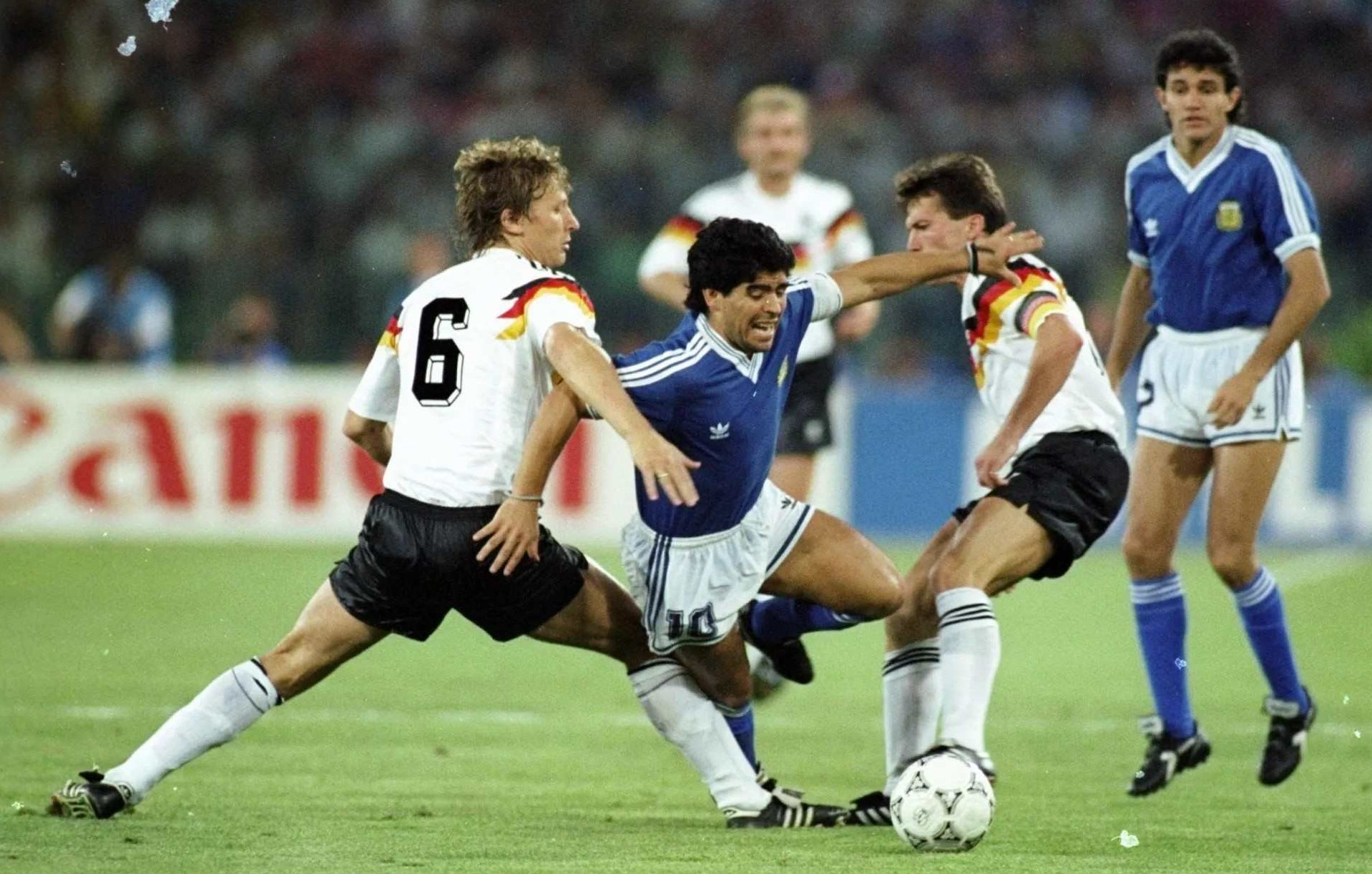
Maradona spent much of the match under relentless pressure from German defenders. To many Argentine supporters, the repeated challenges on their captain went largely unpunished, while disciplinary decisions increasingly favoured the opposition. Pedro Monzón became the first player ever to be sent off in a World Cup final before Gustavo Dezotti also received a red card late in the match, leaving Argentina to finish with only nine men.
Despite the numerical disadvantage, Argentina defended resolutely. For 85 minutes, the reigning champions frustrated one of the strongest German sides of its generation and looked capable of forcing extra time through determination and disciplined organisation.
Then came the defining moment.
Referee Edgardo Codesal awarded West Germany a penalty following a challenge by Roberto Sensini on Rudi Völler inside the penalty area. Andreas Brehme calmly converted from the spot to hand West Germany a 1-0 victory and their third World Cup title.
The penalty remains one of the most controversial decisions in World Cup history. Supporters of West Germany argue that the referee correctly applied the Laws of the Game. Many Argentinians, however, continue to insist that the contact did not justify a penalty and believe the decision robbed their team of the chance to settle the final on equal terms.
The debate did not end with the final whistle.
For the rest of his life, Maradona openly accused FIFA of treating Argentina unfairly and frequently criticised the leadership of then FIFA President João Havelange. His comments strengthened the belief among many supporters that the defending champions had faced more than just their opponents in Rome.
It is important to distinguish belief from proof. No official investigation or credible documentary evidence has ever demonstrated that FIFA manipulated the outcome of the 1990 World Cup or orchestrated events to prevent Argentina from retaining the title. Nevertheless, the combination of injuries, Caniggia’s suspension, two red cards in the final and a disputed late penalty has ensured that suspicion continues to linger over one of football’s most memorable nights.
History is ultimately written by results. Official records show West Germany lifting the World Cup and Andreas Brehme scoring the winning goal. Yet history is also shaped by moments that statistics cannot explain.
For many football supporters, Maradona’s tears were not simply those of a defeated captain. They represented the heartbreak of a football legend who believed his team had not received the fair contest every World Cup finalist deserves.
Whether that belief reflects injustice or simply the enduring pain of defeat remains a matter of opinion. More than three decades later, however, one question continues to echo through football history: was Argentina simply beaten by the better team, or did the events of Rome deny them a genuine chance to defend their crown?


